
Ask anyone who works on Outer Ring Road what they’d change about their job, and the commute usually comes up before the salary.
That may finally be about to shift. Trial runs on the Bangalore Metro Blue Line are expected to begin in October 2026, on the stretch between KR Pura and Marathahalli. When the whole line opens, it will run 58 km from Central Silk Board to the airport, straight through the city’s busiest office corridor.
If your company leases an office in Bengaluru, or is about to, this changes three things: where your people can live, how long they travel, and which buildings everyone will want. Here’s what is confirmed, what is still uncertain, and what to do about it now.
The Blue Line is a 58.19 km metro line with 29 stations. It links Central Silk Board, Outer Ring Road (ORR), KR Pura, Hebbal and Kempegowda International Airport. Trial runs on part of the ORR section are expected in October 2026, and passenger services are now expected to start in stages from 2027. Offices within walking distance of a station on ORR, around Nagawara and Hebbal, and along the airport road stand to gain the most.
What is the Bangalore Metro Blue Line?
It’s the Namma Metro line that follows Outer Ring Road and then turns north to the airport. It is being built in two phases.
| Fact | Detail |
|---|---|
| Total length | 58.19 km |
| Stations | 29 |
| Phase 2A | Central Silk Board to KR Pura, 19.75 km, 13 stations, along ORR |
| Phase 2B | KR Pura to the airport terminals, 38.44 km, 16 stations, through Nagawara, Hebbal and Yelahanka |
| Interchanges | Yellow Line at Central Silk Board, Purple Line at KR Pura, Pink Line at Nagawara |
| Estimated cost | Rs.14,788 crore |
| Planned frequency | A train every 5 to 7 minutes at peak hours |
| Progress | About 73% built as of June 2026 |
The interchanges matter as much as the line itself. A passenger from Electronic City will be able to change at Central Silk Board, and one from Whitefield at KR Pura, and reach an ORR tech park without touching the road.
When will the Bangalore Metro Blue Line open?
In stages, and later than first planned. These are the latest targets.
| Section | Latest target | Based on |
|---|---|---|
| KR Pura to Marathahalli, possibly up to HSR Layout | Trial runs from October 2026 | Bengaluru development minister, June 2026 |
| Central Silk Board to KR Pura | Passenger service in 2027, possibly mid-2027 | Metro officials, August 2026 |
| Hebbal to the airport | June 2027 | Minister’s stated target |
| KR Pura to Hebbal | End of 2027 | Minister’s stated target |
A word of caution. These dates have slipped before. The ORR section was meant to open in 2026, and unfinished work pushed it into 2027.
What is holding it up?
Three things, according to reports from August 2026:
- Ibbaluru. Underground utilities, including a high-pressure gas pipeline, and land acquisition slowed the station.
- Central Silk Board. The last stretch of viaduct, which trains need in order to reverse, waited on permissions and site clearance.
- Marathahalli. Station work and a gap in track-laying could limit how far the first trial runs go.
Plan around the targets, but don’t sign a lease that only makes sense if every one of them is met.
Which office areas does it serve?
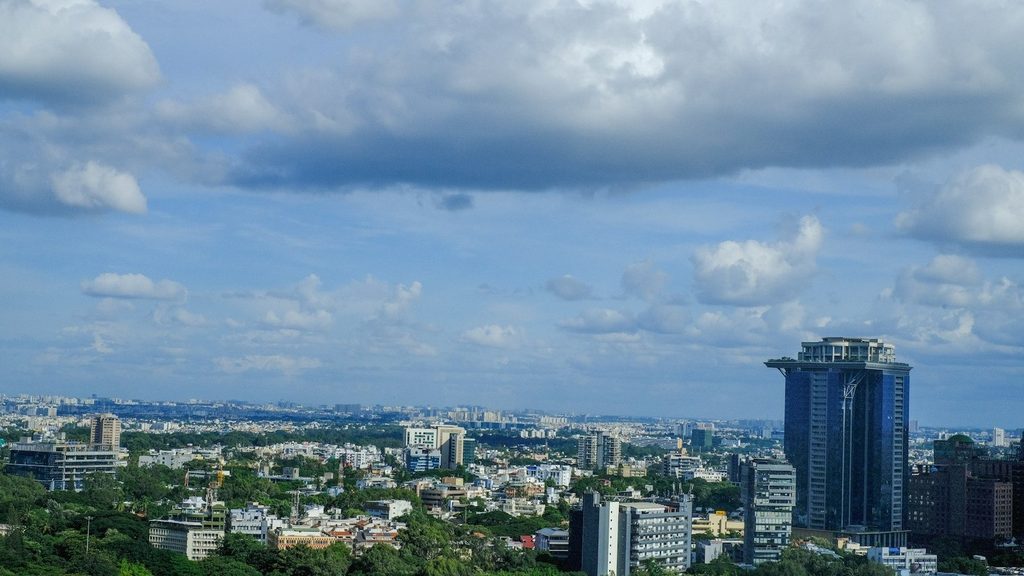
Almost every major office cluster on the eastern and northern side of the city.
| Stretch | Stations include | Office market |
|---|---|---|
| Central Silk Board to Marathahalli | HSR Layout, Agara, Ibbaluru, Bellandur, Embassy TechVillage, Kadubeesanahalli | The ORR tech park belt |
| Marathahalli to KR Pura | ISRO, Doddanekundi, DRDO Sports Complex, Saraswathi Nagar | ORR east, with a change at KR Pura for Whitefield |
| KR Pura to Hebbal | Kasturi Nagar, Horamavu, Kalyan Nagar, Nagawara, Kempapura | The Nagawara and Hebbal office clusters |
| Hebbal to the airport | Kodigehalli, Jakkur Cross, Yelahanka, Bagalur Cross, Doddajala, Airport City | North Bengaluru and the airport corridor |
Two of these markets could hardly be more different today. Cushman & Wakefield’s figures for early 2026 show ORR with about 95 million sq ft of Grade A offices and a vacancy of just 4.5%. The northern periphery had about 16 million sq ft and 19.3% vacancy. Average rents were Rs.106 per sq ft a month on ORR and about Rs.75 in the north.
Put simply, the Blue Line will connect the part of the city with the least empty space to the part with the most.
The scale of ORR explains why this line matters so much. The Outer Ring Road Companies Association represents more than 500 firms on the corridor, with about 1.3 million employees between them. Today there is no metro along the corridor itself.
What about Whitefield, Electronic City and the CBD?
They aren’t on the Blue Line, but they gain from it through the interchanges.
- Whitefield connects at KR Pura on the Purple Line. Grade A rents there run from Rs.80 to Rs.140 per sq ft a month, against Rs.95 to Rs.160 on ORR.
- Electronic City connects at Central Silk Board on the Yellow Line, with rents of Rs.55 to Rs.95.
- The CBD and MG Road connect through the Purple Line, with a change at KR Pura.
For a company with teams in two of these areas, one metro ride between offices becomes realistic for the first time.
Why does it matter for your company?
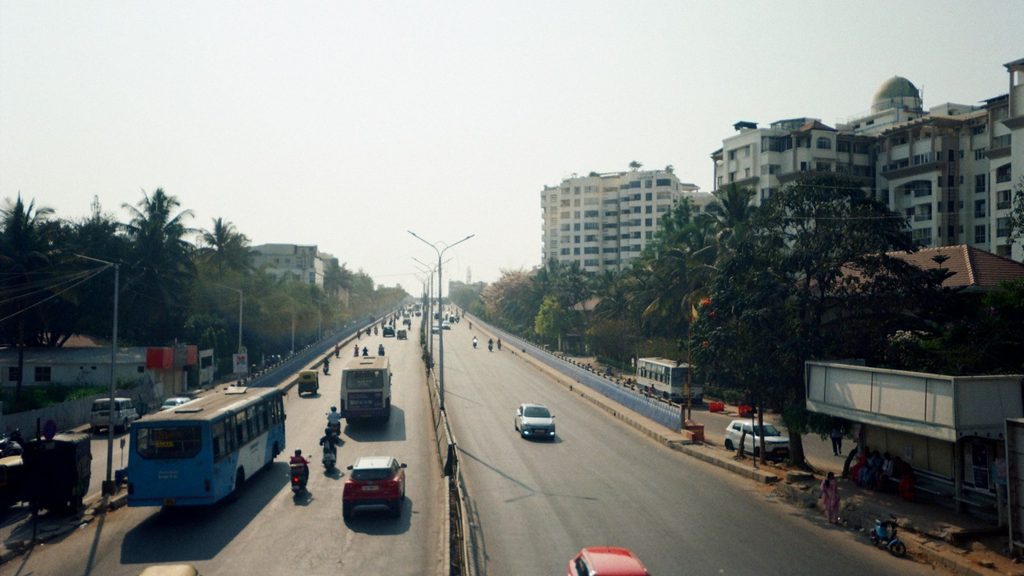
Because location decisions are really commute decisions. In CBRE’s 2026 survey of office occupiers in India, nearly 70% named commute and connectivity as their top criteria for choosing an office.
Here’s what the line changes in practice.
- A wider hiring pool. People living along the Yellow, Purple and Pink lines will be able to reach ORR and Hebbal by train. That opens up neighbourhoods your recruiters currently rule out.
- Predictable travel time. A train takes the same time on a rainy Friday as on a Sunday. For teams with fixed shifts or client calls, that reliability is worth a lot.
- A real airport link. KR Pura to the airport is expected to take about 35 to 40 minutes. That helps client-facing firms and global teams with frequent visitors.
- North Bengaluru becomes practical. Lower rents and more available space have always been the north’s appeal. The missing piece was getting people there.
- Lower transport bills. Many ORR companies run shuttles and cabs for their staff. A station nearby gives you room to cut that back.
One short-term warning. Construction isn’t over, and road resurfacing worth Rs.450 crore has been planned on ORR between October 2026 and January 2027. Expect the corridor to get harder before it gets easier.
Will office rents near the stations go up?
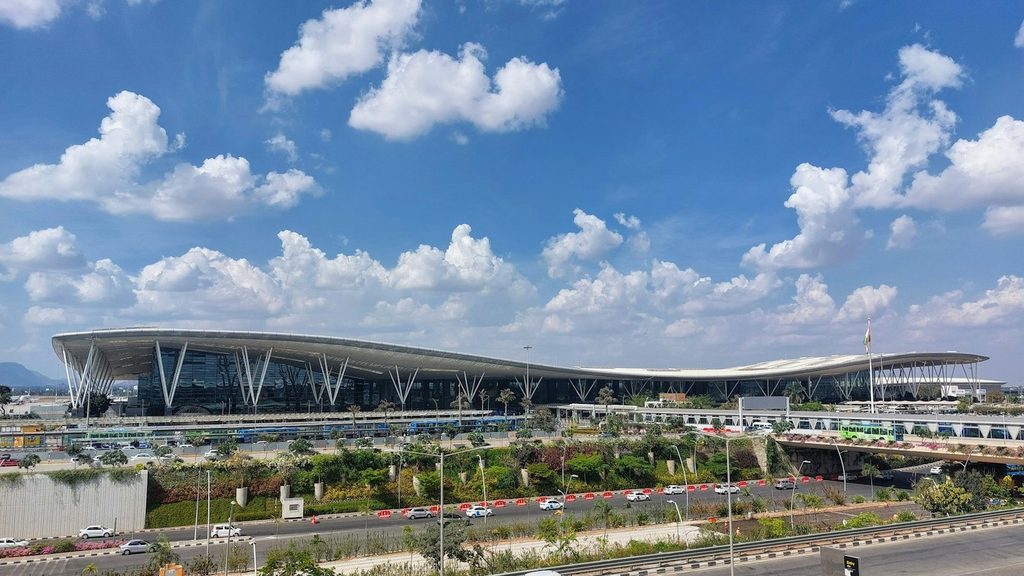
Nobody can honestly promise a number, but the pressure points are clear.
- ORR has almost no slack. At 4.5% vacancy, a small rise in demand is enough to move rents in the best buildings.
- Tenants say they’ll pay for transit. In the same CBRE survey, about 18% of occupiers said they would pay a premium for access to public transport.
- Rents are already rising. Average office rents across India’s top seven cities were up 7% on a year earlier in the third quarter of 2026, according to Colliers.
The likeliest outcome is a wider gap between buildings. Offices within a five to ten minute walk of a station will be first choice. Buildings a long way from one will have to compete on price.
In the north the picture is different. There’s more space available, so rents may stay steady for longer while demand catches up. That’s the window for companies that want metro access without ORR prices.
What should you do now?
It depends on where you are today.
- Your ORR lease ends in the next 12 to 18 months. Open renewal talks early. Agreeing the rent and yearly increases before trains start running is usually easier than after.
- You’re searching for a new office. Shortlist buildings by walking distance to a Blue Line station, and walk it yourself at 9 am.
- You’re priced out of ORR. Look at Hebbal and the stations north of it, and check which section’s opening date applies to you.
- You’re setting up a global capability centre. A station-side address with a direct airport link is hard to beat. Starting in a managed office keeps you flexible until the line opens.
If you can’t commit until the dates are firmer, a managed office near a future station is a sensible middle path. You get the location now on a one to three year term, and decide on a long lease once the trains are running. Our guide to flexible office space in India explains how that works.
Before you sign for any “metro-connected” office, ask five questions.
- Which station is nearest, and when is that section due to open?
- How long is the walk from the lobby to the platform, and is there a proper footpath or skywalk?
- Is a metro premium already built into the quoted rent?
- What yearly increase applies after the line opens?
- Will the building run a shuttle until then?
How Login Realty helps
Login Realty has worked in Bengaluru’s office market for more than 30 years, so we can tell you which buildings will sit beside a station and which only claim to. Here’s how we help you plan around the Bangalore Metro Blue Line.
- Station-side shortlists across Outer Ring Road, Marathahalli, Bellandur, Hebbal and North Bangalore
- Honest timelines, so you know what’s open today and what’s still a target
- Negotiation support on rent, lock-in and yearly increases before the metro premium arrives
- Zero brokerage on office leasing
If the airport side interests you, our guide to office space near Kempegowda Airport covers that corridor in detail.


