
The quote looks clean: Rs 100 per sq ft a month. You multiply it by your floor size, it fits the budget, and the deal feels done.
Then the first invoice arrives with maintenance, parking and an air-conditioning bill for last Saturday. Months earlier, the landlord also asked for a deposit big enough to hire three engineers.
None of this is a trick. These charges are normal in Bengaluru’s office market, and most are written into the term sheet. They’re just easy to overlook when everyone is talking about rent. This guide walks through the hidden costs of leasing office space one by one, shows what they add up to on a real example, and lists the questions to ask before you sign.
The hidden costs of leasing office space in Bangalore usually add 30% to 50% on top of the quoted rent. The biggest are common area maintenance (CAM), typically Rs 15 to Rs 40 per sq ft a month; car parking, often Rs 3,000 to Rs 6,000 per slot a month in tech parks; air-conditioning outside building hours, billed by the hour; and a security deposit of 3 to 10 months’ rent paid upfront. Stamp duty, power backup, the gap between super built-up and usable area, and the cost of handing the space back also add to the bill.
Why the quoted rent is only part of the bill
Office rent in India is almost always quoted per square foot of super built-up area, per month, and excludes everything else. That one number is what gets compared across buildings, so it’s what landlords compete on.
Everything else sits in the term sheet: maintenance, parking, utilities, deposits and escalations. Bengaluru’s rents are also climbing. Office rents across India’s top seven cities were up 7% on a year earlier in the third quarter of 2026, according to Colliers. When rent rises, every charge linked to it rises too.
So the useful question isn’t “what’s the rent?” It’s “what will this office cost us each month, all in?”
1. CAM charges: the one everyone underestimates
Common area maintenance, or CAM, pays for running the parts of the building you share with other tenants. That includes:
- Housekeeping and security in lobbies, corridors and washrooms
- Lift and escalator maintenance
- Running the central air-conditioning plant during building hours
- Power for common areas, and landscaping
- Fire safety systems, water and sewage treatment
- The facility manager’s fee
In Bengaluru, CAM generally runs from about Rs 15 to Rs 40 per sq ft a month, depending on the building’s grade and what’s included. Like rent, it’s charged on super built-up area.
Two details make CAM more expensive than it first appears.
- It grows faster than you expect. Many leases allow CAM to rise every year with actual costs, often with no cap. Rent may increase only once every three years.
- It’s often an estimate. Some buildings bill a provisional CAM and send a reconciliation bill at year-end if actual costs came in higher.
What to negotiate: Ask for a written list of what CAM covers, a cap on yearly increases (3% to 5% is a common ask), and the right to see the annual CAM accounts.
2. Car parking: often charged per slot

Most Grade A buildings give you a fixed parking ratio, such as one car slot per 1,000 sq ft. In many tech parks, those slots aren’t free.
A real example: when Nike India leased space at Bagmane Tech Park in 2026, its lease included 55 car parking slots at Rs 5,500 per slot a month, according to Business Today. Across the city, paid tech park parking commonly runs Rs 3,000 to Rs 6,000 a slot a month. Two-wheeler parking is cheaper but adds up for large teams.
A 20-slot allocation at Rs 5,500 is Rs 1.1 lakh a month, or more than Rs 13 lakh a year, before any increase.
What to negotiate: Ask how many slots come with the space, whether they’re free or paid, whether the rate rises along with the rent, and what extra slots and visitor parking cost.
3. HVAC overtime: the bill for working late
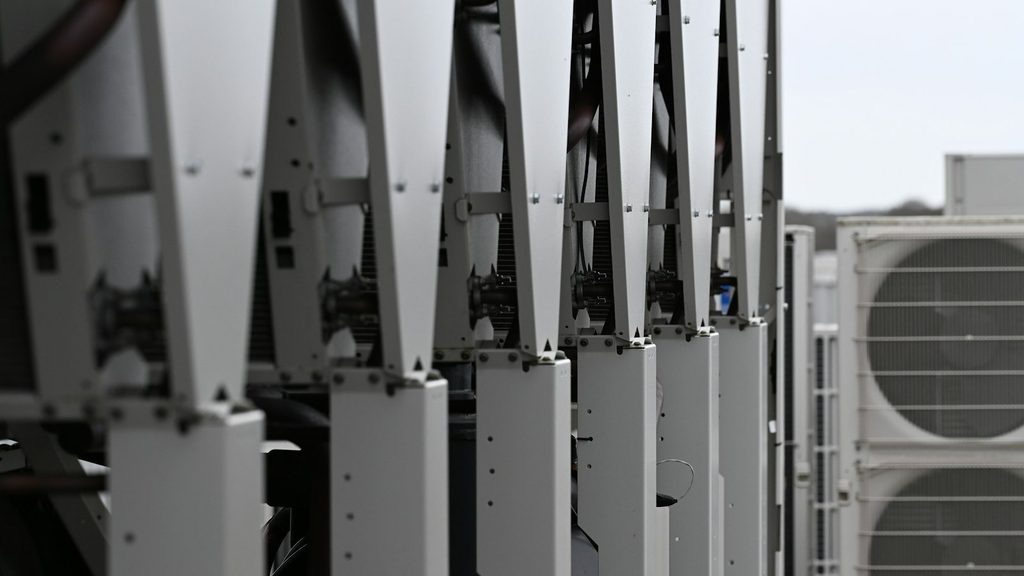
This is the cost that surprises tenants most. In a building with central air-conditioning, the cooling runs during fixed operating hours, typically weekday office hours and part of Saturday. The CAM covers those hours only.
If your team works late, runs a night shift or comes in on a Sunday, the landlord switches on the chillers just for you and charges for it. This is called HVAC overtime, or after-hours air-conditioning. It’s usually billed per hour, per floor or zone, and the rate varies widely by building.
Even a modest pattern adds up. A team that keeps one floor cool for two extra hours every weekday evening uses about 40 overtime hours a month. Multiply that by the building’s hourly rate and you have a new fixed cost that nobody put in the budget.
This matters most for companies working with US or European time zones, which describes many of the global capability centres setting up in Bengaluru.
What to negotiate:
- Ask for the building’s operating hours in writing, and the hourly overtime rate.
- Negotiate longer standard hours if your team works late.
- Check whether you can install your own split or VRF units for server rooms and late-shift areas.
4. Security deposits: a large cheque you don’t get back for years
Deposits in Bengaluru are among the highest in India. Recent large leases show the range:
| Company and building | Monthly rent | Security deposit | Roughly |
|---|---|---|---|
| Honeywell, RMZ Ecoworld (2026) | Rs 4.39 crore | Rs 26.85 crore | 6 months |
| Nike India, Bagmane Tech Park (2026) | Rs 80.25 lakh | Rs 4.81 crore | 6 months |
| Ola Electric, Prestige RMZ Star Tech | Rs 1.74 crore | Rs 4.54 crore | 2.6 months |
| Qualcomm, Bagmane Constellation | Rs 2.89 crore | Rs 5 crore | 1.7 months |
For smaller offices, landlords often ask for more. Business Today reported in 2025 that some Bengaluru landlords were demanding 10 months’ rent upfront, against 2 to 6 months in Delhi and Mumbai. Market guides put the usual range at 3 to 10 months.
The deposit is refundable, so it’s easy to treat as “not a cost”. But money locked away for five years is money you can’t spend on hiring or growth. At a 10% cost of capital, a Rs 60 lakh deposit costs you about Rs 6 lakh a year in lost returns. It also usually earns no interest, and deductions at exit for “damage” are a common dispute.
What to negotiate: Fewer months, a staggered deposit, or a bank guarantee instead of cash. Agree a clear refund timeline and a written condition report at handover.
5. The costs nobody lists on the term sheet
Beyond the big four, several smaller items regularly catch tenants out.
- Loading. Rent is charged on super built-up area, which includes your share of lobbies, lifts and corridors. Indian office buildings typically have a loading of 20% to 35%, so 10,000 sq ft on paper may be only 6,500 to 8,000 sq ft you can use.
- Electricity and power backup. Your own floor’s power is billed at actuals. Diesel generator backup is usually billed per unit, and a DG unit costs roughly three to four times a grid unit.
- Stamp duty and registration. In Karnataka, a lease of one to ten years attracts stamp duty of about 1% of the average annual rent plus any advance or deposit, and a registration fee of about 0.5%. Check the exact amount on the Kaveri portal.
- GST. Rent, CAM and parking all carry 18% GST. GST-registered businesses can usually claim it back, but it still ties up cash until you do, and businesses that can’t claim it simply pay it.
- Escalation. Rent typically rises 15% every three years in Bengaluru, as in the Nike, Qualcomm and Ola leases above. Some leases instead add about 5% a year.
- Fit-out and reinstatement. A bare shell needs interiors that typically cost Rs 1,500 to Rs 4,500 per sq ft. At exit, many leases require you to restore the space to its original condition at your expense.
- Lock-in penalties. If you leave during the lock-in period, typically 12 to 36 months, you may owe the rent for the rest of it.
- Brokerage. Often one to two months’ rent, depending on who you work with.
Hidden costs of leasing office space: a worked example
Let’s price a typical 10,000 sq ft office on Outer Ring Road, quoted at Rs 100 per sq ft a month. These are illustrative assumptions, so swap in your own quotes.
| Cost | Assumption | Per month |
|---|---|---|
| Rent | Rs 100 per sq ft on 10,000 sq ft | Rs 10,00,000 |
| CAM | Rs 18 per sq ft | Rs 1,80,000 |
| Car parking | 20 slots at Rs 5,500 | Rs 1,10,000 |
| HVAC overtime | 40 hours at an assumed Rs 2,500 an hour | Rs 1,00,000 |
| Deposit’s lost returns | 6 months’ rent (Rs 60 lakh) at 10% a year | Rs 50,000 |
| Stamp duty and registration | Spread over a five-year lease | Rs 4,500 |
| Total before GST and electricity | Rs 14,44,500 |
That’s 44% more than the quoted rent. And if the building’s loading is 30%, you’re using only 7,000 sq ft, so your real cost is about Rs 206 per usable sq ft a month, more than double the Rs 100 on the quote.
Over five years, with rent rising 15% after year three and CAM rising 5% a year, this office costs about Rs 9.2 crore. Rent is Rs 6.4 crore of that, and the extras are about Rs 2.8 crore. Electricity, fit-out and GST come on top.
A checklist before you sign

Ask the landlord to answer these in writing:
- What exactly does CAM include, and how much can it rise each year?
- How many parking slots come with the space, and what does each one cost?
- What are the building’s air-conditioning hours, and what’s the hourly overtime rate?
- How many months’ deposit, when is it refunded, and can it be a bank guarantee?
- What is the loading, and what’s the carpet area we can actually use?
- How are electricity and power backup billed?
- What are the escalation, lock-in and reinstatement terms?
Then put every quote into a single all-in cost per usable sq ft. That’s the only fair way to compare two buildings.
How Login Realty helps
Login Realty has advised companies on Bengaluru office leases for more than 30 years, and we’ve seen how the hidden costs of leasing office space change which building is really the better deal.
- All-in cost comparisons of every shortlisted building, per usable sq ft
- Lease advisory to negotiate CAM caps, parking, HVAC hours and deposits
- Zero brokerage on office space for rent in Bangalore
- Options across Outer Ring Road, Whitefield and the rest of the city
For current rents by area, see our office rent guide for Bangalore. If you’re still deciding whether to lease at all, our guide to renting vs buying commercial space in Bangalore runs the numbers.
Frequently asked questions
What are CAM charges in an office lease?
CAM, or common area maintenance, covers the cost of running shared parts of the building, such as lobbies, lifts, security, housekeeping, common-area power and central air-conditioning during building hours. In Bengaluru it typically costs Rs 15 to Rs 40 per sq ft a month on super built-up area.
How much security deposit do offices in Bangalore require?
Usually 3 to 10 months’ rent. Large companies often negotiate six months or less, while smaller tenants are sometimes asked for 10 months upfront.
Is parking included in office rent in Bangalore?
Often not. Many tech parks charge per car slot, commonly Rs 3,000 to Rs 6,000 a month. Check how many slots come with your space and what each costs.
What are HVAC overtime charges?
They’re fees for running central air-conditioning outside the building’s standard operating hours, such as late evenings or weekends. They’re usually billed per hour, per floor or zone.
Is GST charged on office rent and CAM?
Yes. Commercial rent, CAM and parking carry 18% GST. GST-registered businesses can generally claim it as input tax credit.
How much extra should I budget over the quoted rent?
Plan for roughly 30% to 50% more than the quoted rent, before electricity, fit-out and GST. The exact figure depends on CAM, parking, deposit and your working hours.
The rent on the quote is where an office lease starts, not where it ends. CAM, parking, air-conditioning after hours and a large deposit can easily add 40% or more, and super built-up area means you pay for space you’ll never sit in.
None of these costs is unusual, and most are negotiable before you sign. They just need to be on the table at the start, not discovered on the first invoice.
Want a clear view of the hidden costs of leasing office space in the buildings you’re considering? Tell us your team size, budget and preferred area, and we’ll send an all-in cost comparison with zero brokerage.


